

The Process: Ensemble Du Verre
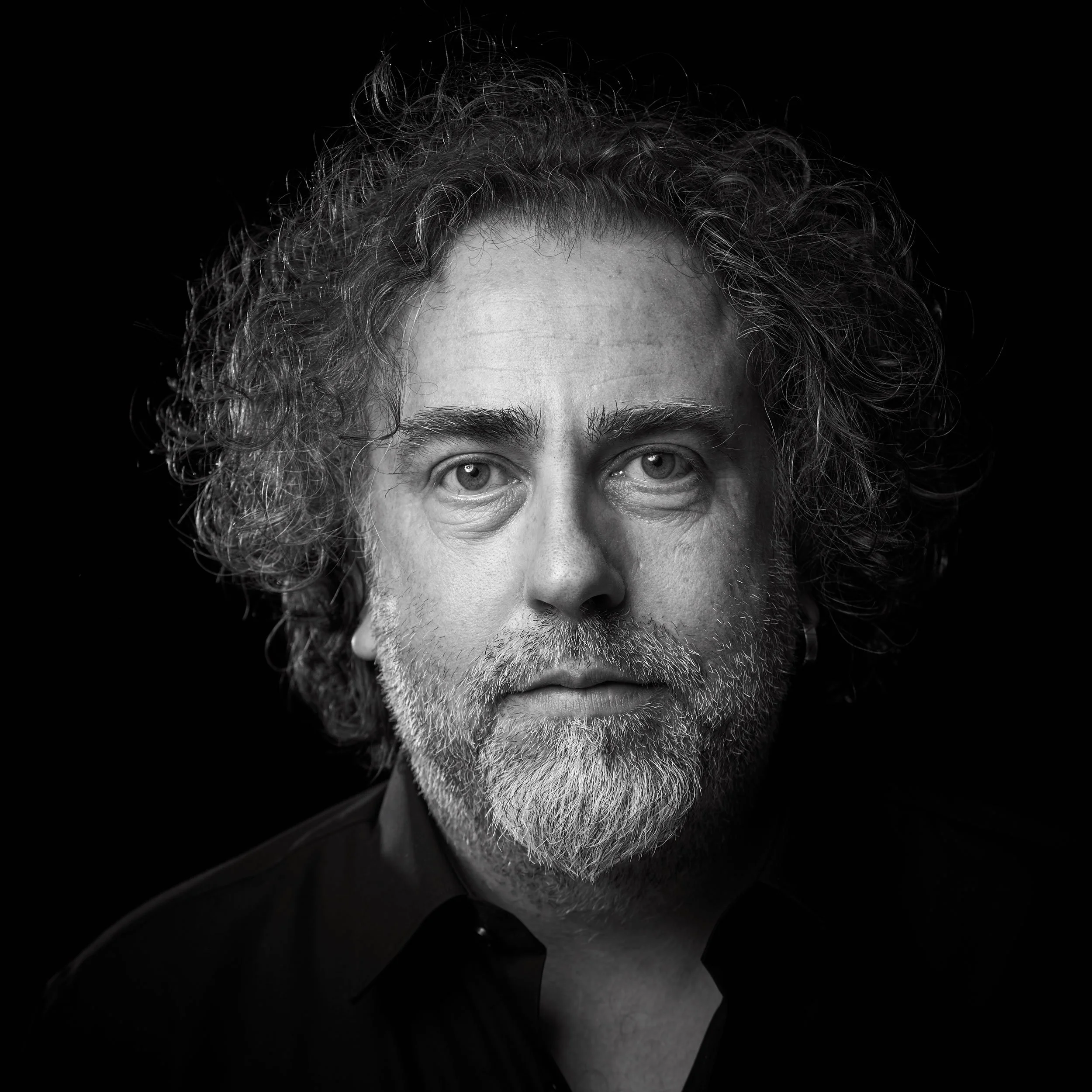
Sönke Düwer of Ensemble Du Verre
Can you tell me about yourself?
I started playing drums and taking lessons at the age of twelve. My parents had little understanding for it – I had to cover half the costs myself. That summer I took a holiday job, and on Sundays I delivered newspapers. After six weeks I had enough money for my first drum kit. That was my greatest stroke of luck – and today I know that part of that luck was having truly worked for something. Achieving things through effort and perseverance has remained the foundation of how I work in music to this day.
At fourteen I developed the dream of studying music one day. I come from a simple working-class household, and the idea was met with rejection. But at twenty-four I was accepted at the Berlin University of the Arts, where I studied jazz drumming, with piano and composition as minor subjects.
Today I also work in psychosocial counselling for people in the arts. My own experiences with self-efficacy in childhood and adolescence help me understand, time and again, what kind of resistance musicians can encounter in their immediate surroundings.
"Lost in Your Garden" is a beautiful album – congratulations! Can you tell me about your writing process?
My writing processes vary greatly – I have no fixed strategies or forms. Most of the music takes shape at the piano. I write the way composers have done for a long time. I let things happen and try to follow my instincts and needs in the creative process. When I sense that I'm putting myself under pressure, or that an idea isn't resonating with me, I step back and return to it at a later point.
That's how the original material for the album came together over several years. It was a process in which each piece had its own pace of development. Some compositions came together quickly – but then I didn't know how to continue. Every new idea seemed to weaken the original one.
I had to experiment and wait. That took patience, but there was always the option of simply not releasing the music. Without the pressure to succeed, I work better.
A genuine feeling for the music develops that way – a congruence. I then know that I want to hear it exactly like this, and no other way.
You made some unconventional arrangement choices, like working with two double basses. What was the idea behind that?
I'm glad you ask, because this decision shaped the album profoundly and inspired me in the process.
When I decided in February 2025 to try putting an album together, the idea of two double basses didn't exist yet. But after the first recording session with Melanie Streitmatter, there was this one moment – and this is where it becomes clear that chance is my best friend.
I had recorded four bass tracks for one song and set them up so I could listen through and compare them carefully. There was so much good material – all improvised, played with very few guidelines – that I simply couldn't decide. So I panned one track a little more to the left and another a little more to the right, just to hear what would happen. That's the whole story. Suddenly, and by chance, I had taken one of the most significant steps in the development of the album.
You collaborated with many guest musicians on the album. How do you feel about that process?
This kind of work has many dimensions that can only be roughly outlined here – because it is work with people, and with their intention towards my music. They add something to my music and change it. That's precisely why I invited them into the studio. But then something happens outside of my control, and a part of the music no longer belongs only to me, but also to the other person. We share something – and only in that moment do I find out whether I truly want that.
In many cases it works well, because I've invited the right person or was able to communicate my ideas clearly. But sometimes it goes wrong. Something emerges that I don't like, and my music threatens to slip away from me. That's not easy – not for me, and not for the person I'm working with either. Those are the difficult moments. But they can be part of any collaboration, not just in music.
For this album I worked with five colleagues. Their contributions are of the greatest value to me. Without them the album would be unthinkable. They inspired and motivated me – I'm very grateful for their input.
How different is working with guest musicians for you, compared to working with samples?
The biggest differences are communication and resonance. Something happens on a psychological level – the music changes, as I've already described.
Samples, on the other hand, I can select and edit with great precision. Cut, colour, and manipulate them in any way I choose. I don't have to think about whether it's acceptable to alter a recorded contribution after the fact. Sometimes samples are exactly the right tool for the job. They can make the work a great deal easier.
The disadvantage I personally experience, time and again, is interchangeability. I often can't build a strong connection to the sounds. If I found something else that fit a particular moment, I could simply swap out the sample. With a live recording, it's something else entirely. It's unique – I connect with it, it means something to me. It adds the personality of the guest musician to my music. A sample can rarely offer that.
The album feels very much like something that was played live. How much of what we hear comes from playing, and how much from editing?
All the instruments – saxophone, trumpet, flugelhorn, piano, synthesizer, bass and drums – were recorded live, and in the vast majority of cases that's exactly how you hear them. The sequencer parts and strings were programmed. I edited recordings mainly when I made changes to the arrangements after the fact. It happened fairly often that I shortened a section, which meant I had to adjust recordings accordingly – solos, for example.
But there are also songs that are more of a musical mosaic – the title track being one of them. Here, piano parts were processed with granular synthesis, saxophone tracks were broken into individual phrases, and many further editing steps were taken. In the end, a bass recording and a drum recording gave this work a frame – the live performances hold the many small parts together. Hence the title of the song. It's more of a labyrinth than a straightforward arrangement.
How does working in a digital domain fit into that process? Would you be able to fulfil your vision for the album working only with analogue tools?
Digital work is a natural part of my process – it gives me the freedom to create a sonic world on my own and without a large budget, which would otherwise only be possible with many people and considerable resources. The equipment alone that I would need would far exceed my spatial and financial means. The digital tool is not a compromise for me, but a creative space. Plugins like Kolor and Brut in particular expand my possibilities without me feeling like anything is missing.
And yet it would be a genuine dream to record this music together with a large ensemble, or to perform it on a concert stage in front of an audience. It would absolutely be possible – it's simply a question of money. And therefore, unfortunately, more or less out of reach. But it's a beautiful idea. Perhaps in another life.
Do you feel like AI is going to replace real musicians any time soon?
I don't just think it will happen – it already is. That's the price of progress we all pay. AI doesn't stop at art. When I ask graphic designers or journalists about their experiences, they'll tell you their professions have been changing significantly for some time now.
And yet there will always be people who love to play their instrument – and people who love to listen. Fundamental human needs for communication and belonging are touched here. No AI can replace that. For me, that's a comforting thought.
But then I imagine being able to "commission" a string quartet – writing a prompt asking for something that sounds like this or that Bartók piece. And if the result is genuinely convincing... that thought creates a dissonance in me. On one hand, it's tempting to arrive at such a result without the actual compositional skills, and without having to invite, record and pay a string quartet. But at the same time it's a "Frankenstein feeling" – I'm creating a monster. That wasn't me, and it will never truly be alive. Simply because it was created by an artificial intelligence drawing on material that doesn't belong to me. A "Bartók remix", in a sense. I find that morally highly questionable – and it's something that will continue to occupy society in the years ahead.
You're credited for recording, mixing, and mastering the album – besides playing drums and piano, programming, and creating the string arrangements. How does it feel to wear so many hats on a project?
Ensemble Du Verre has existed since 2003. Over all those years I've collaborated with many people – musically, but also in areas like production, graphic design, and everything else that surrounds a music production. I've learned a great deal about all of these disciplines along the way.
Over time it became increasingly clear to me that I wanted to do things my own way. So I gathered experience step by step, in order to truly realise my vision. Some tasks took many hours – but in the end I had brought something from within myself into the world. That is of great value to me as an artist. Emotionally, I find a particular kind of joy in working across so many roles. I'm juggling seven balls at once – and when it works, I feel proud and satisfied.
Can you tell me about the recording process?
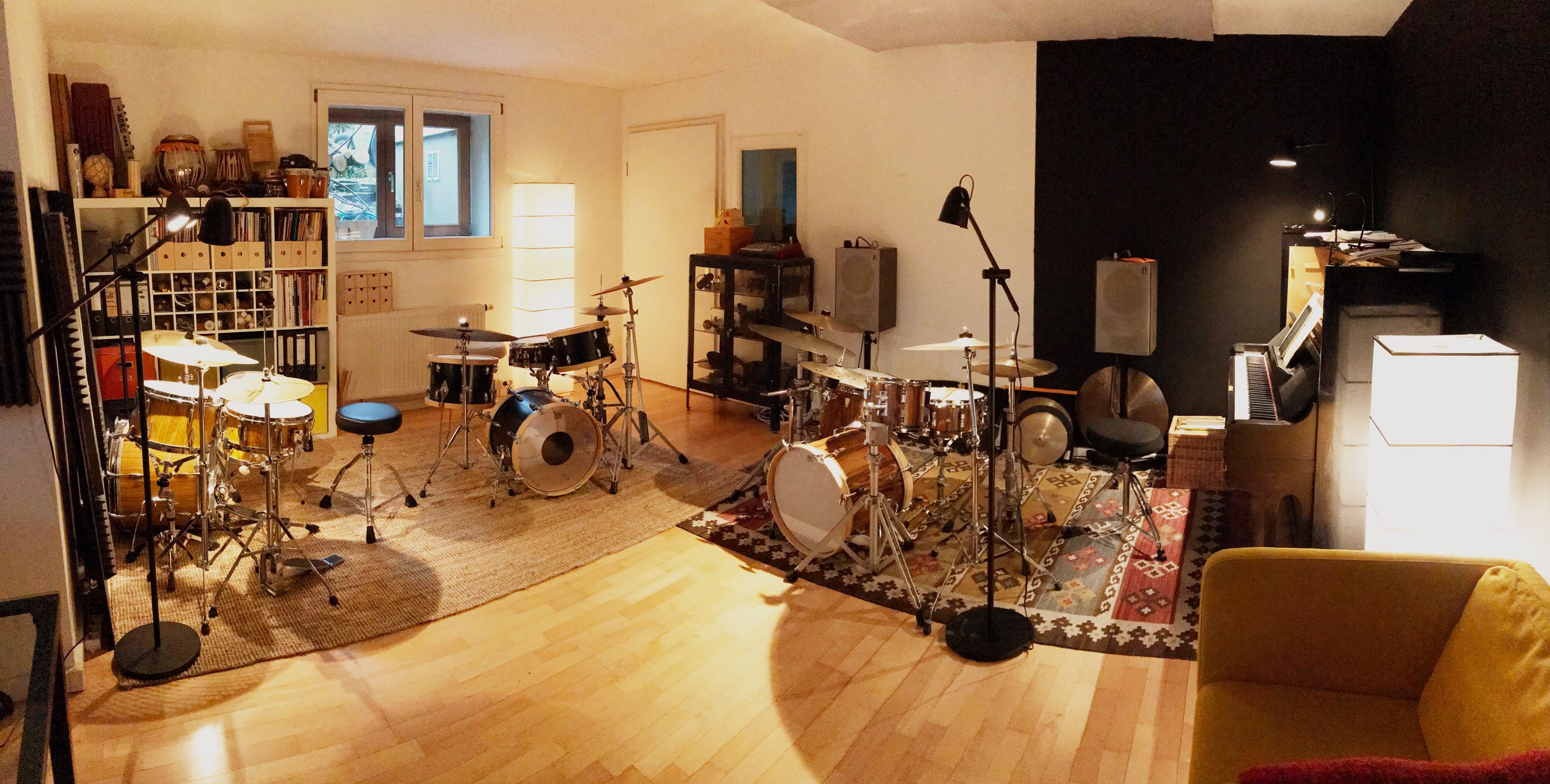
Since I compose everything at the piano, it's also the first instrument I record. I practise until I arrive at a result I'm truly convinced by. I then edit a version that I would call the ur-piece – the original. Everything is already contained within it: the dynamics, the form. I can listen to it without feeling that anything is missing. What I'm describing here doesn't apply to every piece, but to the majority of the twelve songs.
With these piano tracks in place, I invited Melanie Streitmatter into the studio to record bass. We had four sessions in fairly quick succession, during which we experimented a great deal. After the first session the idea of two basses emerged – and all subsequent recordings were shaped by that.
I then edited everything and arrived at very clear structures. From there I moved on to drums – still my primary instrument. I spent a lot of time playing and experimenting. After a week I was done, and I went back to editing – though with drums I barely touched anything. I wanted to preserve a certain rawness, and I'd rather record more takes than cut too much. In this production, the drums often serve the function of adding colour rather than providing groove. That too shapes the character of the music.
With this foundation in place, the other guest musicians came to the studio – each for a few hours. We drank coffee and listened to the music together, and each person played on the pieces that inspired them. A wonderfully uncomplicated process.
The only exception were the recordings with Ursula Rucker, which were made in Philadelphia, where she lives. Flying from Hamburg for a two-hour session simply wasn't an option – she sent me the recordings afterwards, and I handled the editing from here.
I process all recordings sonically from the very beginning. I immediately start searching for the right sound. That way, the guest musicians always hear something that sounds good in their headphones. It has never failed to have an effect.
I really like the sound of the album – it's modern and classic at the same time. How did you achieve that?
My musical upbringing is, as I've mentioned, multilayered. My aesthetic sensibilities are oriented less towards a particular style and more towards the idea of eclectic music.
My work is perhaps comparable to that of a sculptor: I repeatedly step back from what I've made and try to hear the whole from the outside – to grasp it as a totality. In the process I often lose myself in details. When that happens, it helps to simply switch off the music and come back to it a few days later. That's how I manage to bring together elements from very different worlds.
I'm particularly fond of working with apparent opposites. At the beginning of the song "Acht Kostbarkeiten" you hear a kick drum – sonically reminiscent of techno. It passes through a filter sweep and finds its final sound along the way. Meanwhile, a pulse enters – synth chords landing consistently on the third eighth-note triplet of each beat, creating a swing rhythm. The drums, played with brushes, improvise over this in a classic jazz style, evoking something of ECM Jazz from the seventies. Complementary elements come together to form a whole.
This search is an essential part of my work. It can take a long time, become exhausting – and sometimes fail. That's the nature of artistic processes: they lead into an uncertain future. At least, that's what I experience, again and again.
Can you tell me about the gear you used to create the album?
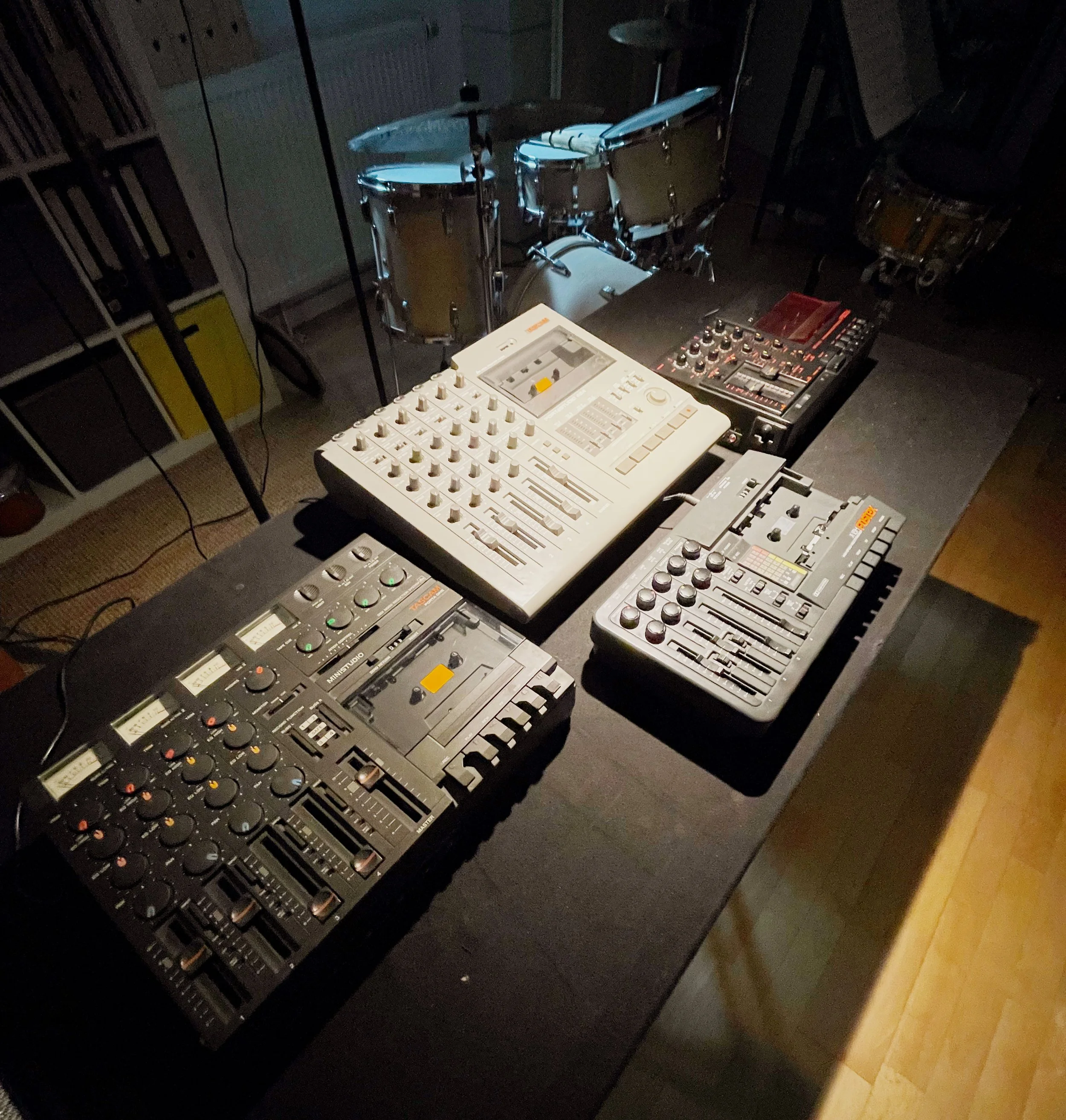
Instrument, microphone, preamp and analogue-to-digital conversion – that's a playground for me. My piano is a hundred years old, and I received it at eighteen from an elderly aunt. I'm fifty-eight now – I've recorded this instrument ten thousand times and know exactly how to achieve any sound I'm after. The AEA R88 gives wonderful results, while the Microtech Gefell M94 capsules produce something entirely different. The choice of microphone is a creative tool for me, just as much as the instruments themselves.
With double bass, I always record the sounds of the fingerboard as well. I can blend these in later – and in many moments they contribute to an intense atmosphere. One of my main microphones is a U47. It captures an enormous amount of detail, which gives me the freedom to choose later what I want to make audible.
Then there's a Millennia preamp, which sounds very clean, alongside several vintage preamps with their own distinct characters. In combination, the possibilities multiply – and the search for the right sound is always worthwhile. At the end of the chain sits a Mytek 8x192, going into an RME card. The output runs through a summing mixer and a pair of old Adam monitors. I'm generally very happy with my sound – but there's always further to go. My wife sometimes sees it slightly differently.
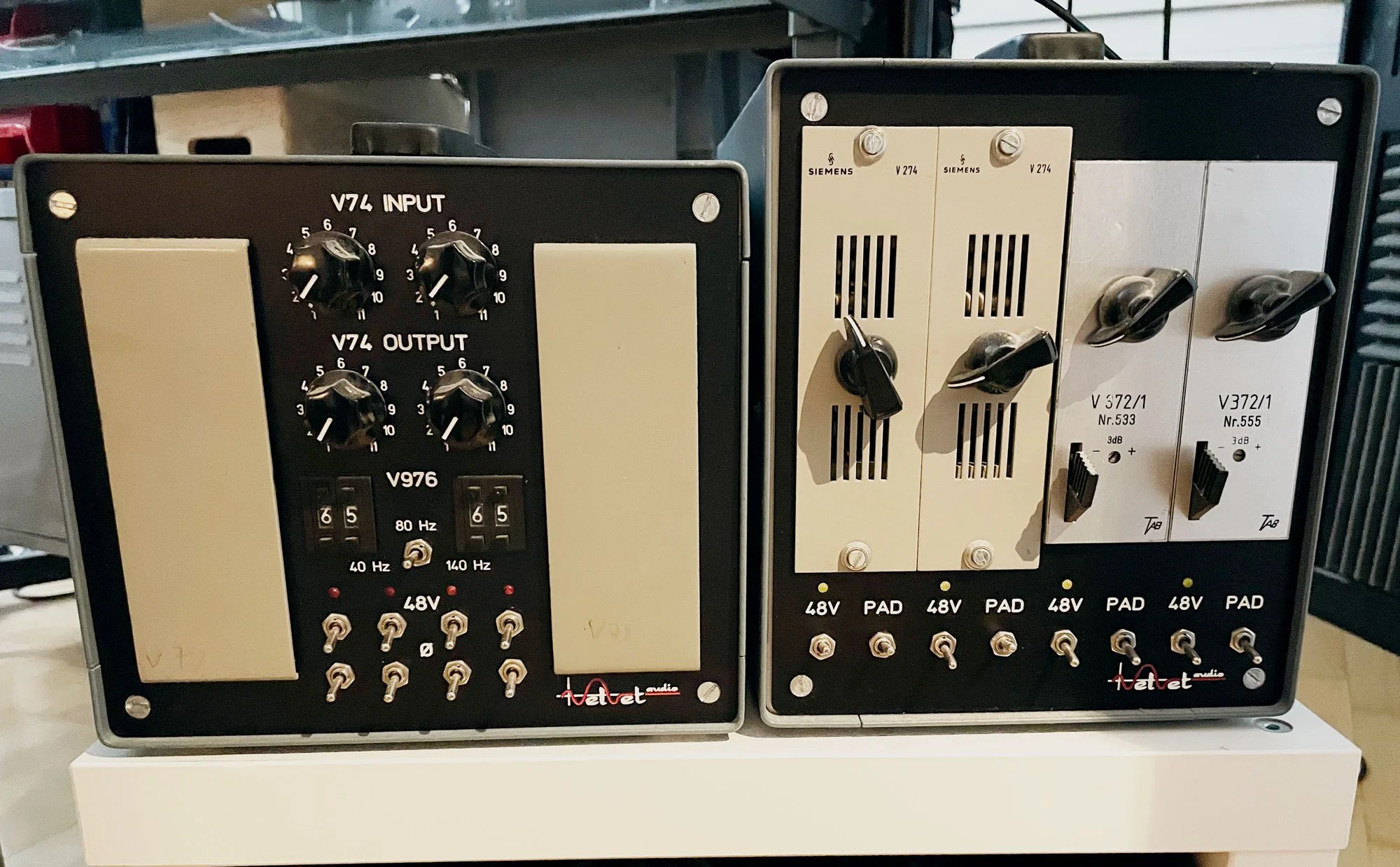
Vintage Telefunken, Lawo and Siemens preamps
Are there any pieces of gear you can't live without?
First and foremost, my piano – it's a part of me, made visible in the world.
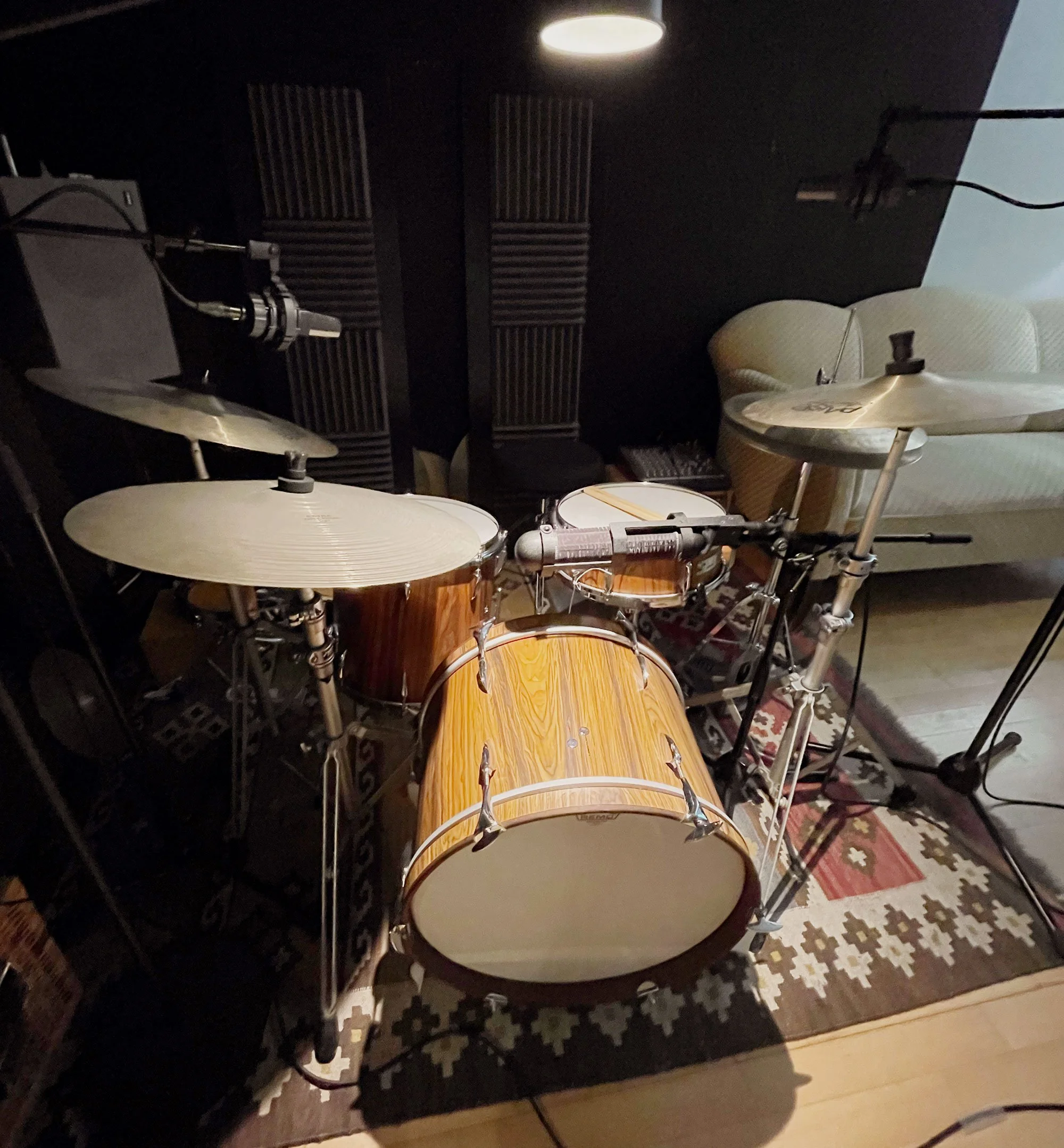
I currently play a 1967 Sonor Teardrop drum kit with shell sizes 18x14, 14x14, 12x12 and 14x5. It's not only a very rare piece of instrument history – it sounds simply beautiful with its beech shells. I play it with cymbals by the Danish cymbal maker Funch Cymbals. They're the finest cymbals I've ever owned. I could keep buying more. But my wife...
On the studio side, it's the Mytek 8x192. The conversion quality of this interface is exceptional – I hope to keep using it for a long time. I've been working with it for twelve years now. And my U47 and AEA R88 are equally indispensable.
What is your favourite track on the album and why?
In a sense I can't really feel it that way – whenever I name one track, I immediately think of all the others and feel guilty, because I've taken every one of them to heart.
But I did choose one: "In einer Winternacht" – "In a Winter's Night". This song no longer really belongs to me, because Adrian Hanack poured liquid gold over it from his tenor saxophone. He enriched the music so deeply and lifted it to an entirely different level. Add to that the completely improvised bass lines of Giorgi Kiknadze on the right and Melanie Streitmatter on the left. The song was transformed – and I'm grateful, again and again, that this happened to me.
Can you give me a short breakdown of the arrangement of that track?
We play through the form of the composition three times, followed by a short reprise. In the second pass, the saxophone enters, along with some high piano notes to add further colour. The two bassists build their energy across all three passes. The piano remains throughout in the safe waters of the composition, staying strictly with the written notes.
Once everything was in place, I recorded drums one more time, trying to create more space and dynamics. I paint more than I play. In the closing reprise, everything returns to calmer waters and fades out.
How have you used Felt Instruments on this album?
During the production I loaded Kolor as a demo and immediately fell in love with the plugin. I bought a licence and used it in every single song – on the piano, the basses, the drums, and certainly on other tracks as well. The results delighted me.
Rysy and Smugi also appear several times. And then above all the strings – Blisko. The distinctiveness of these sounds inspired me greatly, and I spent a real amount of time with them. I often had to hold myself back to avoid overloading the arrangements. This string library is truly impressive. (To the readers: I'm not being paid to say this!)
And then there's Nisko. I use this bass in several places to create depth in the background – hidden, but doing its work. I notice it when I mute it. Something is suddenly missing. It's almost a little esoteric, but it means a lot to me.
Any other plugins that inspired you?
Pulsar makes a beautiful compressor – the IPA 25. It worked very well for this production. I always try to find plugins that can give an entire project a sonic identity, and then use them consistently throughout. For other productions I choose something different. That's a genuine advantage of the digital world.
Then of course the classics from UAD. But what truly inspires me are plugins that expand my current aesthetic. It's a constant search – but one I enjoy.
You've also created the album cover. What was your process like?
It was preceded by a falling-out with a graphic designer I had worked with for many years. I was left feeling completely unsettled and didn't know how to realise my very vague idea for a cover. A first attempt with AI then gave me the idea to try going that route. I booked a monthly subscription, started researching images of gardens, and had a vision of something along the lines of "60s Psychedelic Art". I had around a hundred images generated and approached a result at a snail's pace. I then took that result and developed it further in a design programme – text, colours, and so on.
The artwork for the CD packaging was ultimately created by a different graphic designer. The final product turned out really beautifully – I'm very glad this work came together the way it did. That wasn't a given at every stage of the process.
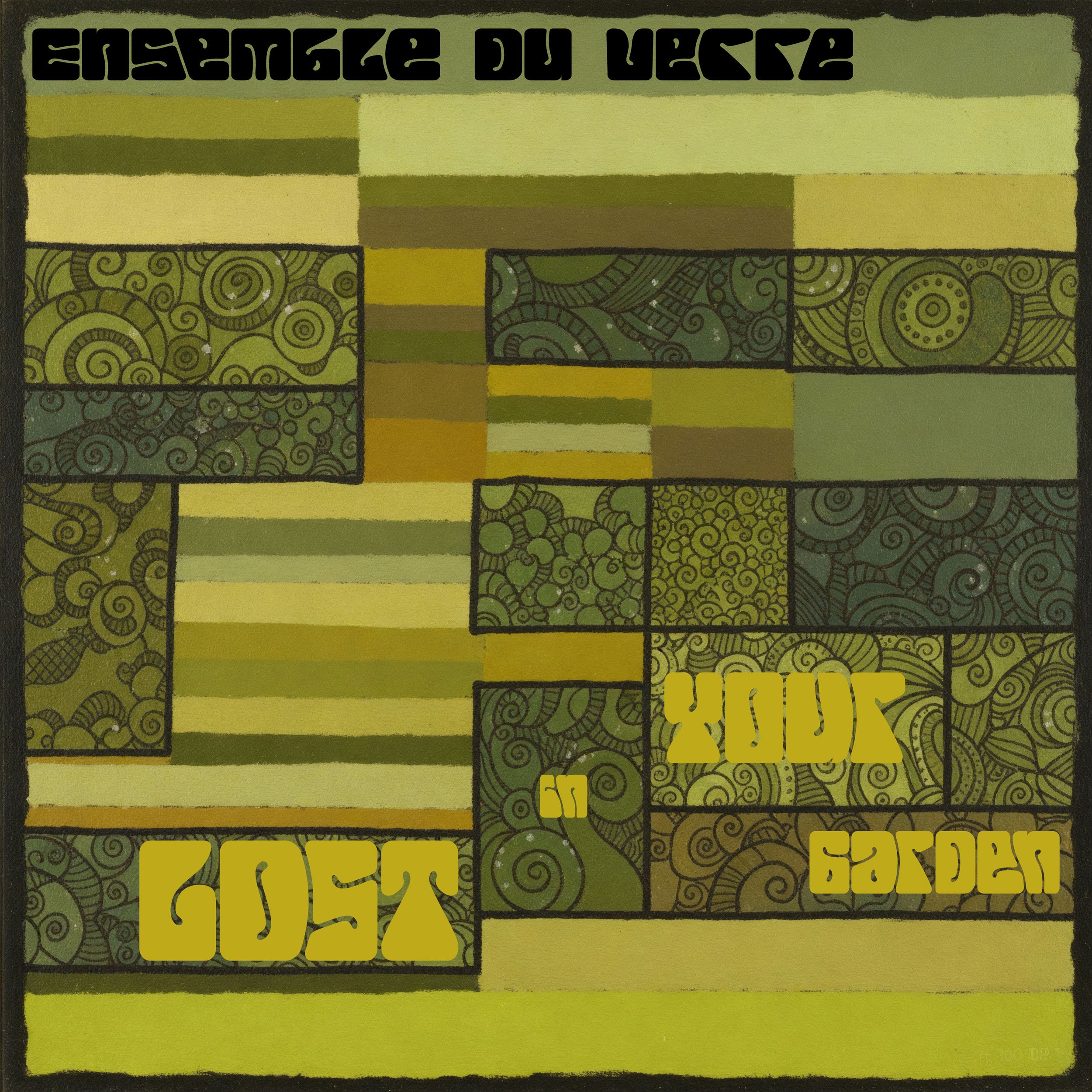
Lost In Your Garden album cover
The current culture seems to favour instant results and focus on the product rather than the process. AI music is a good example of that. This album feels like the complete antithesis of that. How is the process important to you as an artist?
The process is not a method for me – it is the experience itself. Being in the process is one of the most intense experiences of my life. It's the moment when everything comes together: devotion, passion, fragility, lightness, an enormous weight. The result is the imprint of that. It is a witness. And it changes – it wears down, accumulates narratives, and eventually takes on a life of its own. I can only circle around it and describe it. I cannot truly grasp it.
And that, for me, is the core of the difference from AI-generated music. Not because AI produces poor results – but because this process is simply not its goal. AI optimises for the result. I live in the process. For me as an artist, that is everything.
Where can we listen to the album?
The album can be ordered as a CD via Bandcamp and is also available on all major platforms, including Apple Music, Spotify, and the other usual suspects.
Want to share your Felt story? Get in touch and let’s start talking!
PLUGINS MENTIONED IN THIS post