

Embracing the old ways

SELA passive equalizer, sampled for Kolor. Two knobs of glory.
The best thing about vintage equipment has nothing to do with tubes and transformers. Well, at least for the most part.
If you've ever followed some mixing tutorials, you've surely seen hints like 'cut the low end at 47Hz', 'notch out 260Hz', or 'boost the highs at 7.2K'. All that with an ever-present graph showing your track's frequency response as you tame those nasty resonances, cut the mud and carve the low end. And frankly - that's great, this is precisely what digital is so good at: precision.
And yet, there's nothing musical about it. Why?
First of all, it turns you into a surgeon. You've got the most precise tools, you can tame every resonance, bend the frequency response as you please, with as many bands as you require. I'm sure there are people who enjoy this style of work (surgeons come to mind). I'm just not one of them.
The problem is, if you're presented with infinite choices and possibilities, how do you choose the right one? And how do you make sure that the choice you made is correct? Will that snare sound better if you move that bell a couple of hertz up or down? Can you even hear that? Won't that vocal sound just a little bit more airy and awesome if I move that shelf 20hz up? It's called choice paralysis, and it's the number 1 reason why when somebody tells me they've designed a tool that offers infinite possibilities, I feel something got wrong in the process.
And then, because of how the task is presented to you, you're basing those choices on a non-musical sense - your eyes. Don't get me wrong, I love my eyes! But I'd rather make judgements about sound with a different part of my body.
If you're an experienced mixing engineer, you've probably learned to commit to a choice you've made and move on. But if you're just starting out, you might have just spent a couple of hours fine-tuning a snare drum, and that's just the first track from the project!
Often times, your tracks will sound over produced, too polished, too cut, or just too much 'done'.
Vintage EQs offer you the opposite. There's no screen, the frequency and db markings are often not perfectly spot on. And none of this matters, because the workflow is fundamentally not precise by design. You end up working faster, and doing less - with better results.
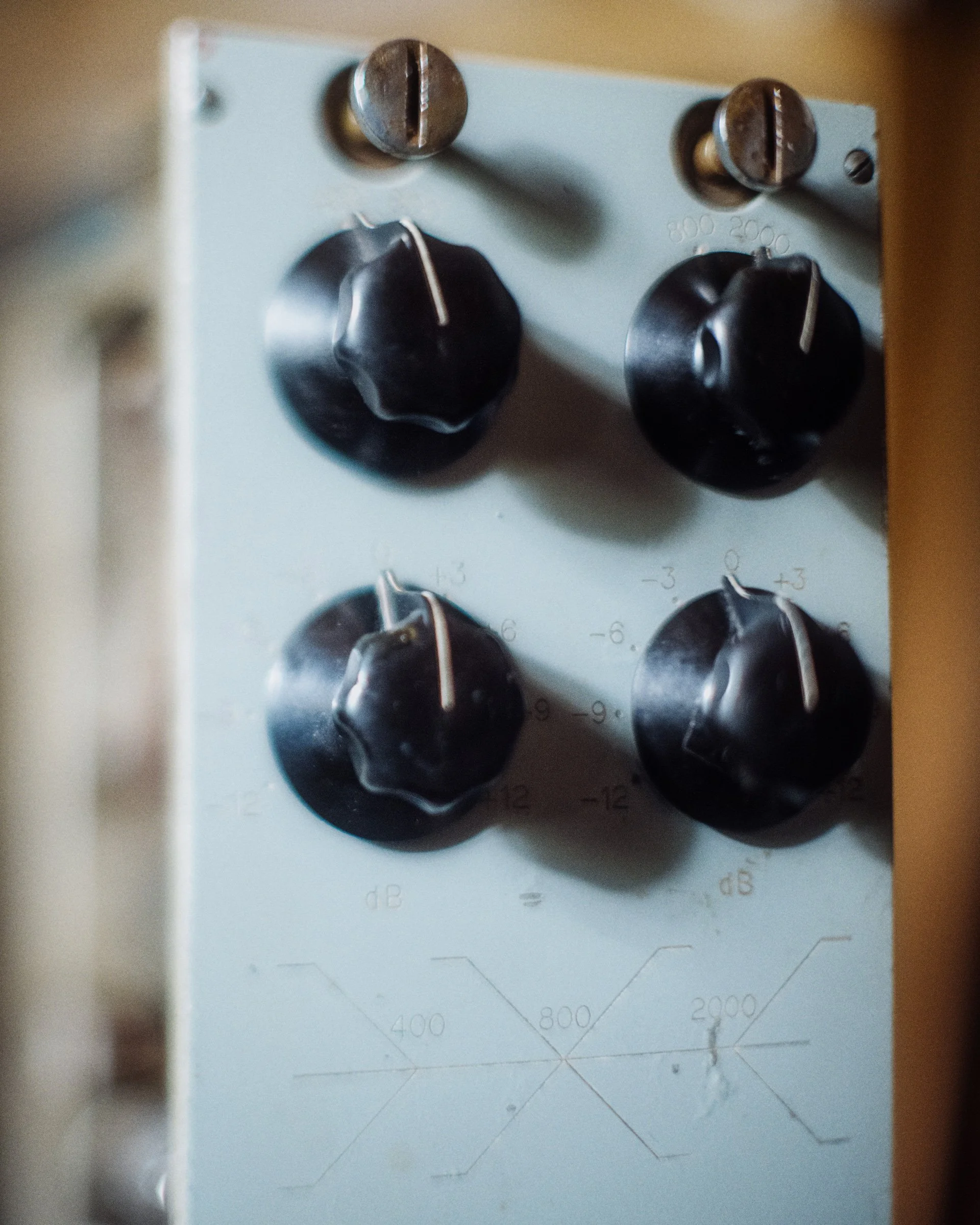
The two top knobs set the frequency of the shelves, and the ones at the bottom set the equalization (in 3db steps). Notice the beautiful frequency graph under the knobs!
It's actually the same with recording to analog tape vs using it as a mix-time sweetener. What makes music recorded to tape sound like music recorded to tape is the tape workflow. It forces you to perform, and get things done as the tape is rolling. No plugin will give you that. And I promise you, even if you have a nice Studer sitting there in a corner of your room, it won't give you that either - unless you commit to its way of working and invite the machine to join the process.
When I was designing Kolor, I had a very vintage workflow in mind. Three big knobs. Tweak and move on. That approach has nothing to do with nostalgia, imitating certain piece of hardware, or making things look 'nice' (whatever that means). It has everything to do with sound - it encourages you to make choices fast, following your human instinct, and then progress to other tasks.
You might have heard that the greatest paintings of masters like Rembrandt took years to complete. There's also a technique called alla prima. It means that the entire painting is done spontaniously in just one sitting. Here are two paintings, one by Rembrandt, the other by one of my favourite painters, David Park:

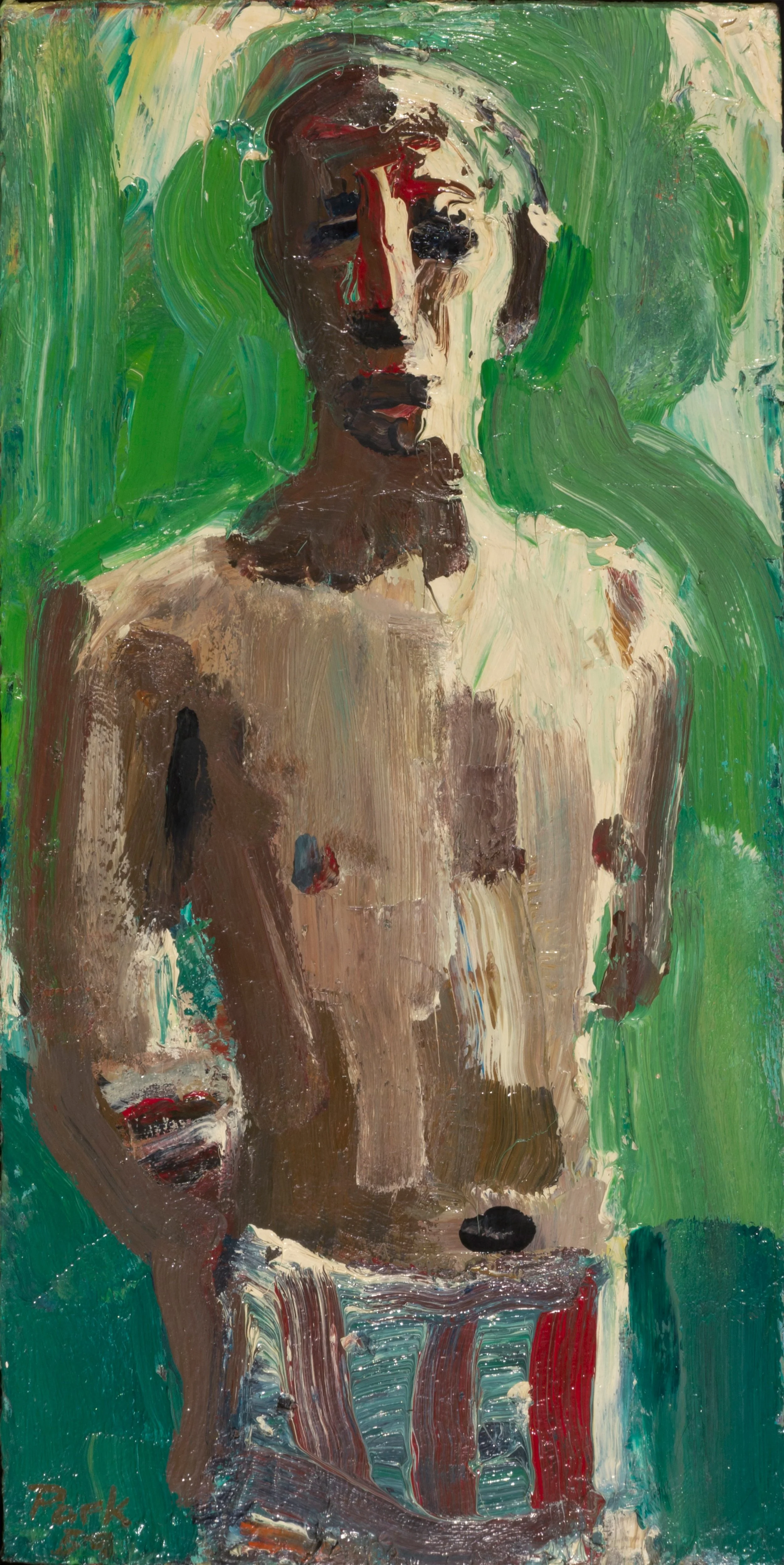
They couldn't be more different - as surely were the processes behind them. And while you're most likely not spending years finessing that snare drum (hopefully!), I believe there are different types of expression to be found, based on the tools we use, and the approaches we take.
It doesn't mean we should discard all things digital and start making notes on cave walls. There's nothing stopping you from using more precise tools for precise tasks. Plugins like Pro-Q, Trackspacer, SplitEQ or Soothe will come in handy to tackle specific issues, and every single one of them will do so much more than any vintage EQ. And yet they fail at capturing the thing I consider an equivalent of spice - mojo. And mojo, my dear, is what takes a cool mix to a whole new level.
Personally, I tend to reach for them if I feel something is still missing after applying the broad-stroke, alla prima adjustments with an old-school EQ. And frankly - the more I use the old stuff, the less I need the new shiny toys. Maybe that slight resonance at 476hz won't kill my mix after all? Maybe the top end isn't as harsh, because I put a nice polishing preamp section on it?
And yes, I know there are other EQs that have three big knobs, it's not like I invented a wheel here! But here's where tubes and transformers actually help your process. Thanks to how the devices I sampled were made, the sound is always smooth, larger than life, and just plain beautiful. Sticking to the painting analogy - working with Kolor, Kolor Mikro, or vintage hardware, feels like using the best quality of paint and canvas you can find. It's not just about moving fast. It is about getting to the point where you feel happy.
For me, that point is actually in two places. Musically - where I'm satisfied with what I hear. Phisically - on a couch, with a warm cup of coffee. I tend to go from point A to point B, enjoying all the benefits of moving faster.
PLUGINS MENTIONED IN THIS post